The Hierarchy of Language in “The Perseverance.” – Chicago Review of Books
The Hierarchy of Language in “The Perseverance.” – Chicago Review of Books

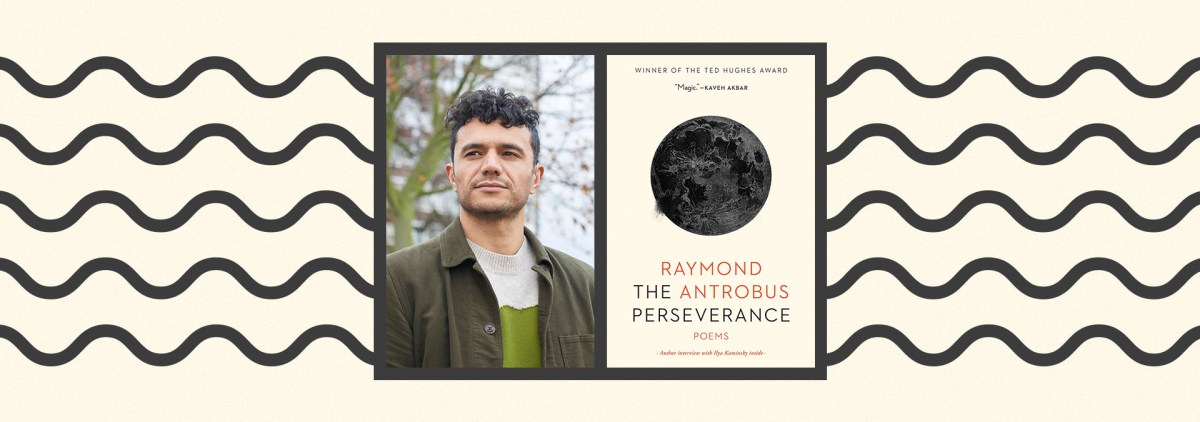
[ad_1] The title of Raymond Antrobus’s debut collection, The Perseverance, derives from the name of the London pub the poet’s father used to frequent, an establishment whose doors were shut upon young Raymond, with “50 p. to make [him] disappear,” many an afternoon. Deaf from birth, the boy would stand in front of this everyday … Read more

The Duress of Solitude in Karen Solie’s “The Caiplie Caves” – Chicago Review of Books

The Duress of Solitude in Karen Solie’s “The Caiplie Caves” – Chicago Review of Books

[ad_1] In the wildlands of the North – in Canada, on the Scottish seaboard near Fife, on the cold, metaphysical plains of the isolated soul – the poems from Karen Solie’s The Caiplie Caves live, move, and have their being.  And this being is complex, a multipartite body composed of ages medieval and post-modern, secular and spiritual, … Read more

A Meditation on Noticing in “A Memory of the Future” – Chicago Review of Books

A Meditation on Noticing in “A Memory of the Future” – Chicago Review of Books

[ad_1] Eihei Dōgen Zenji—the Japanese founder of what remains one of the most vital sects within Zen Buddhism, the Sōtō school—wrote the Sansui kyō, the “Mountains and Rivers Sutra” at his Kyoto monastery Kōshōhōrin-ji in the autumn of 1240. A poetic rumination on the foundational co-dependence within all of nature, this sutra has long been … Read more

Coming of Age in “Sin Eater” – Chicago Review of Books

Coming of Age in “Sin Eater” – Chicago Review of Books

[ad_1] Megan Campisi’s novel Sin Eater introduces us to an alternate universe, one reminiscent in many ways of Tudor England, in which certain food items are eaten for the symbolic absolution of a dying person’s sins (a practice not unknown to past Christian communities). For example, pickled cucumber for idleness, roast pigeon for thieving, a rabbit’s heart … Read more