A Curated Playlist for Self-Discovery in “The Fugitivities” – Chicago Review of Books

A Curated Playlist for Self-Discovery in “The Fugitivities” – Chicago Review of Books

[ad_1] A debut novel should pack a wallop. Be it through the language or the themes, the feelings the text evokes in readers must be powerful and undeniable. Jesse McCarthy’s novel The Fugitivities does just that, and can perhaps be best explained as a music playlist curated by the likes of authors Jonathan Lethem and … Read more


The Echoes of Artifacts in “All That She Carried” – Chicago Review of Books

The Echoes of Artifacts in “All That She Carried” – Chicago Review of Books

[ad_1] Just like Tiya Miles, historian at Harvard University and author of All That She Carried, I grew up in Cincinnati, a city where history, voices and ghosts enter without knocking. For Miles, these echoes are held within her Great Aunt Margaret Stribling’s quilt, for me it is my great grandmother’s silver spoon, and for … Read more

New Episode of Your Favorite Book with Jesse McCarthy – Chicago Review of Books

New Episode of Your Favorite Book with Jesse McCarthy – Chicago Review of Books

[ad_1] Welcome to another installment of a collaboration between the Chicago Review of Books and the Your Favorite Book podcast. Malavika Praseed, frequent CHIRB contributor and podcast host, seeks to talk to readers and writers about the books that light a fire inside them. What’s your favorite book and why? This week’s guest is Jesse … Read more

Anguish and Acknowledgment in “Unwell Women” – Chicago Review of Books

Anguish and Acknowledgment in “Unwell Women” – Chicago Review of Books

[ad_1] Elinor Cleghorn’s Unwell Women: Misdiagnosis and Myth in a Man-Made World is an intriguing exploration of the history of women’s health, specifically how women are perceived as individuals and members of a larger healthcare system. The theme, across countries and time periods, is centered on disbelief. The female body, long-held in a place of … Read more

Myth and Metaphor in “Walking on Cowrie Shells” – Chicago Review of Books

Myth and Metaphor in “Walking on Cowrie Shells” – Chicago Review of Books

[ad_1] The final story of Nana Nkweti’s debut short story collection, “Kinks,” bears the book title in a telling passage:  “No matter how many boardroom doors Jennifer walked through, sometimes she felt her steps falter—in the Ghanaian beauty shop, at Awing tribal meetings, she felt like a counterfeit African, felt the unworthiness of the maid’s … Read more

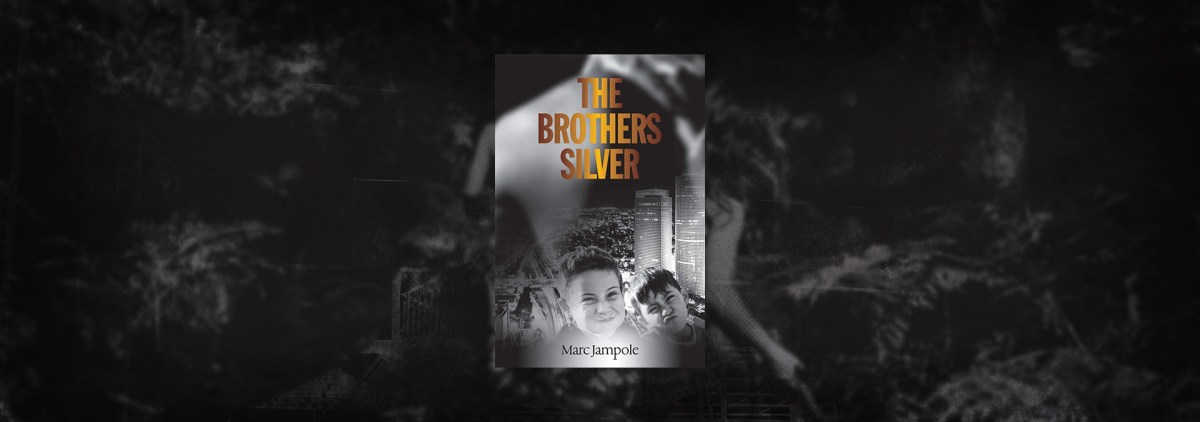
The Depth of Familial Trauma in “The Brothers Silver” – Chicago Review of Books

The Depth of Familial Trauma in “The Brothers Silver” – Chicago Review of Books

[ad_1] Stories of family trauma, parent-child relationships, and sibling relationships are not new in literature. Compelling examples go as far back as the Bible. Unfortunately, writing about family trauma has also often been negatively characterized as confessional, as if certain life experiences are either too embarrassing or otherwise unworthy for literary exploration. The Brothers Silver, … Read more

Uniting Form and Function in “With Teeth” – Chicago Review of Books

Uniting Form and Function in “With Teeth” – Chicago Review of Books

[ad_1] For all the ink shed—in reviews, interviews, and criticism—about the trials and tribulations of navigating the literary world on the level of the individual novel, comparatively little space is provided to career-wide discussions. While this is understandable given the enormous challenge that writing and publishing just one book presents to the writer (not to … Read more

The Power of Friendship and the Grip of Addiction in “Bewilderness:” A Conversation With Karen Tucker – Chicago Review of Books

The Power of Friendship and the Grip of Addiction in “Bewilderness:” A Conversation With Karen Tucker – Chicago Review of Books

[ad_1] In an early chapter from Karen Tucker’s debut novel Bewilderness, the narrator, Irene, and her friend Luce come upon a stash of opioids. “I peered down at the jumbled blue tablets,” Irene tells us. “They really did look about as harmless as breath mints, and yet even I knew I was at the edge … Read more

The Sacredness of Queer Aunthood in “Stone Fruit” – Chicago Review of Books

The Sacredness of Queer Aunthood in “Stone Fruit” – Chicago Review of Books

[ad_1] Myths about romantic and familial love run rampant in our heteronormative, patriarchal culture. As children, we’re trained to believe that romantic love is the most noble love of all, that breakups are failures, and that being a mother is the purest way to love a child. Queer and trans communities have been pushing back … Read more